The first thing the risen Christ commissions is teaching. “Go therefore and make disciples of all nations,” he says, “baptising them… and teaching them to observe all that I have commanded you.” The command has an end built into it. A church that makes converts and stops has done half of what it was told to do, and the other half is instruction.
Paul writes the same thing from the other direction. Christ gave apostles, prophets, evangelists, shepherds and teachers — not so that those people would be admired, but “to equip the saints for the work of ministry, for building up the body of Christ.” The teacher's work is measured by what the congregation becomes, not by what the teacher accumulates.
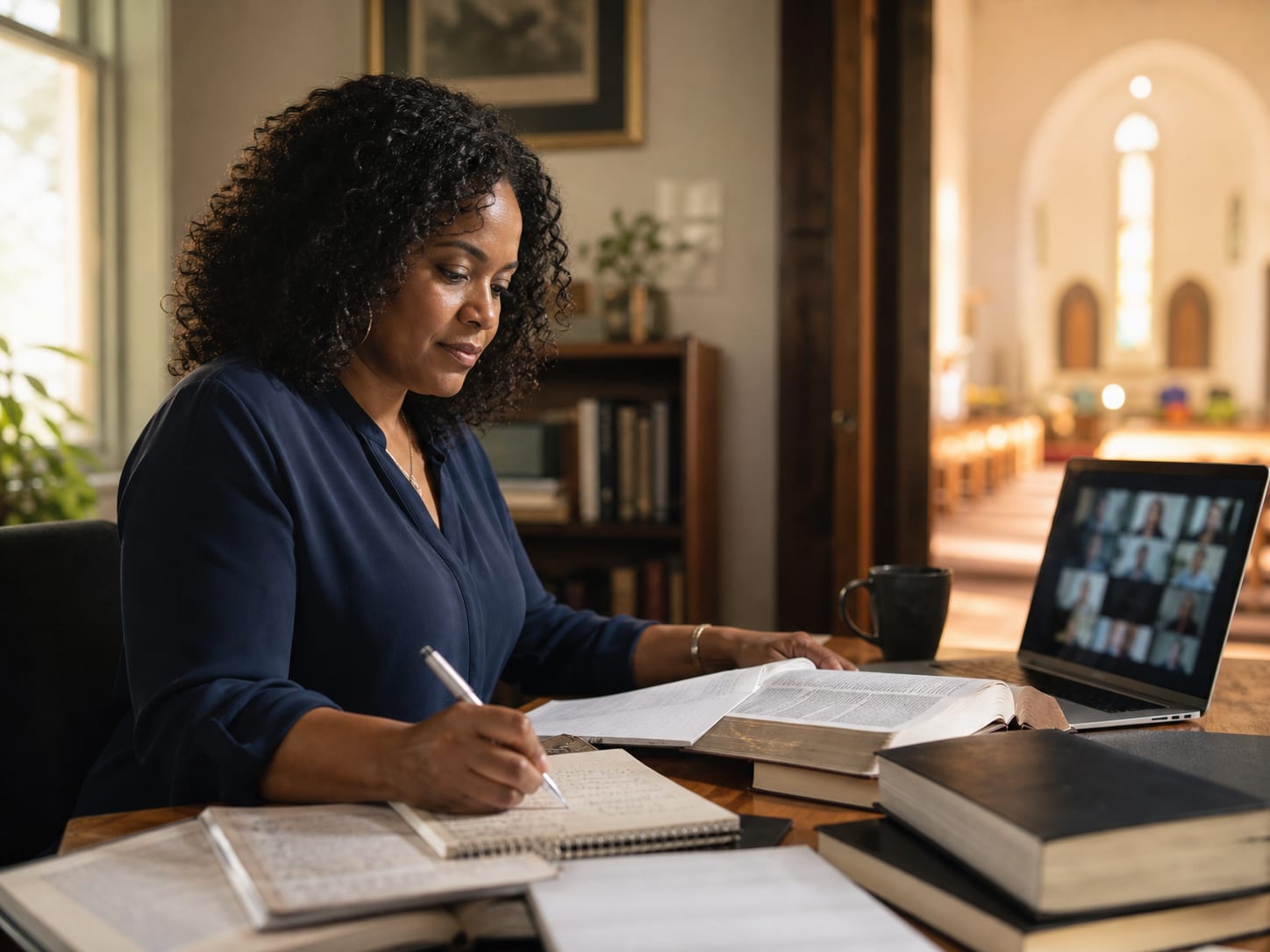
That is why this seminary exists in the form it does. Most of our students are already serving somewhere: a village congregation, a prison, a hospital, a plant that meets in a front room. They cannot leave. So the teaching goes to them, and the standard does not move — because a pastor whose people are asking hard questions is not helped by an easier degree.
“And what you have heard from me in the presence of many witnesses entrust to faithful men, who will be able to teach others also.”
2 Timothy 2:2
Four generations in one sentence: Paul, Timothy, faithful people, and others also. Theological education is that sentence turned into an institution. Nothing taught here is meant to stop with the person who learns it.